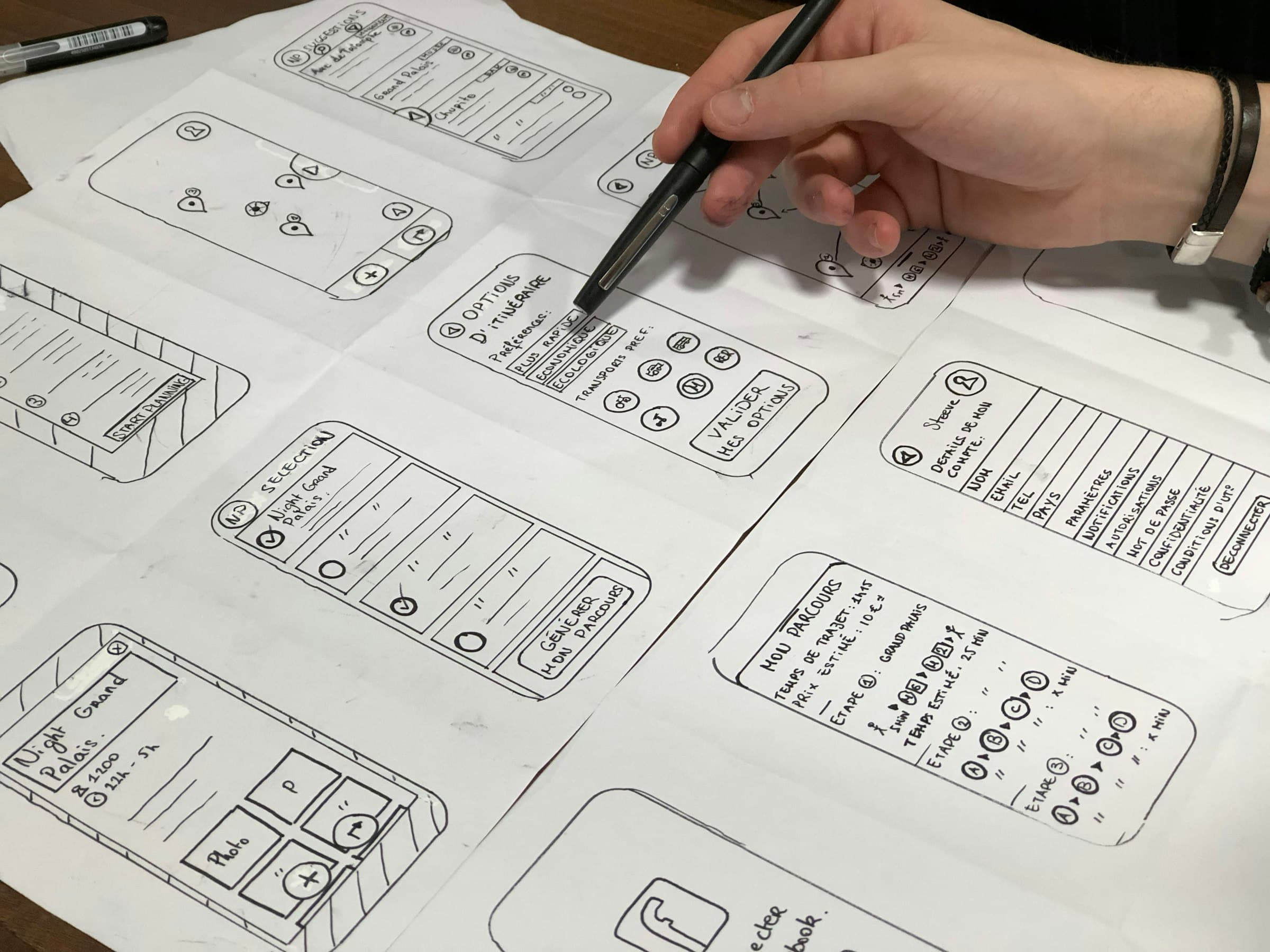
Photo by Amélie Mourichon on Unsplash
Why half of radical redesigns backfire
Peep Laja, founder of CXL, has been on the record for years that approximately 50% of radical redesigns backfire and another large share return no measurable improvement (Peep Laja interview cited in eCommerceFuel). The problem is not that designers are bad; it is that redesigns aim at a brief instead of a measured baseline, so regressions hide behind aesthetic upgrades.
The shrinking upside of a redesign
Nielsen Norman Group's longitudinal data sharpens the point. Average usability improvement scores from before-and-after redesigns dropped from 247% (2006-2008) to 75% (2020), a function of the industry having absorbed most of the easy UX wins (NN/g, 2020). The expected upside from a redesign is now smaller than the variance of the test, which is why so many launches show flat or negative conversion in week one.
Where the measurable gains actually are
Baymard Institute's checkout-usability research, based on more than 4,400 usability sessions across 327 leading sites, finds that the average ecommerce checkout has 39 distinct UX issues and a site fixing all of them could realise up to a 35% conversion lift; in practice teams fix five to ten at a time and see proportional gains (Baymard Checkout Usability, 2024). Unbounce's 2024 Conversion Benchmark Report adds a copy lever: pages written at a 5th-7th grade reading level convert at 11.1% on average versus 5.3% at professional reading level, across 464 million visitors and 41,000 landing pages (Unbounce, 2024).
The protocol that survives: test before you ship
The protocol that survives: A/B-test the redesign at 50/50 against the current page for two weeks before shipping at 100%. Require conversion to land within 5% of baseline before full rollout. If it does not, lift the wins (typography, hierarchy, copy clarity) onto the existing layout rather than push the full rebuild. Designers optimise for portfolio shots when there is no measurement gate; add one and the redesign optimises for the metric the team is paid on.